Today in Tech History on Day in Tech History

April 27, 1998: Koko Gorilla Gets On AOL Chat

Subscribe! Spotify | RSS | More

Subscribe to Day In Tech History:
RSS Feed - iTunes - Google Play - Spotify
Twitter - Facebook
- RSS Bandwidth by Cachefly Get a 14 Day Trial
Be a Part of the Sconnie Geek Nation!
In Wisconsin, friends are called "Sconnies". Even if you're not from Wisconsin, you can be part of the Sconnie Geek Nation through my coverage! By pledging, you join the Geek Sconnie Nation! Plus, you help me cover costs so I can continue the coverage of Gadget tech, music tech, and geek culture through the shows.
- Xerox introduces the 8010 Star Information System.
- Captain Midnight hijacks an HBO satellite
- Giants Pitcher Brian Wilson’s Twitter is shut down due to posts that could give advantage
About Day in Tech History
Podcast and Blog – 7 Days a Week, 365 days a year. Come find out what happened today in tech history!
Part of the Geekazine Network

April 27, 1998: Koko Gorilla Gets On AOL Chat
Subscribe! Spotify | RSS | More 1998 – Using AOL chat, a sign language interpreter and an active audience, a female gorilla named Koko answered questions to the public. Koko resides at the Gorilla Foundation and with a vocabulary of 2,000 words, was able to respond to the chat room. Xerox introduces the 8010 Star […]
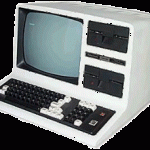
April 26, 1983: TRS-80 Model 4
Subscribe! Spotify | RSS | More 1983– The Trash-80, as it was so admirably called in the day, a.k.a. the TRS-80 Model 4 is introduced. It contains a 4 MHz processor, 16 KB of RAM, a cassette interface, Keyboard and Monochrome monitor. $1000 for the base model, or $2000 if you upgraded the RAM to […]
April 25, 1980: Activision Formed
Subscribe! Spotify | RSS | More 1980 – Activision was technically founded in 1979, but it wasn’t until April 25 that the “Fantastic Four” joined up as the first third-party software company for video games. David Crane and Alan Miller left Atari August 1979 to start programming under the Activision name. Larry Kaplan and Bob Whitehead […]
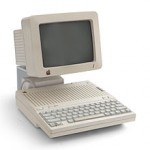
April 24, 1984: Apple IIc Introduced
Subscribe! Spotify | RSS | More 1984 – Apple introduces the Apple IIc, their answer to a portable machine. It weighed 7 1/2 lbs and featured a 1.023MHz CPU and 128 KB RAM. $1,295. The device device had a built-in floppy and peripheral expansion ports. This was a closed system – no expansion slots to […]
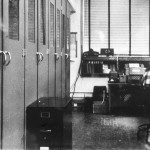
April 23, 1964: Standards Eastern Automatic Computer (SEAC) Decommissioned
Subscribe! Spotify | RSS | More 1964– The Standards Eastern Automatic Computer (SEAC) is retired after fifteen years. SEAC was the first to use all-diode logic. SEAC was bason on EDVAC. It had 747 vacuum tubes, and the clock rate was under 1 mHz. Internet Explorer 2.0 is released for Mac 7.0.1 Carnegie Mellon warns […]

April 22, 1993: Mosaic Browser
Subscribe! Spotify | RSS | More 1993 – The National Center for Supercomputing Applications releases version 1.0 (RTM) of the Mosaic Web Browser. It was the first browser with a Graphical user interface for content. Marc Andreesen and Jim Clark were the lead developers. The browser would take the internet by storm and continue to […]

April 21, 1977: MITS vs Bill Gates & Microsoft: 8080 BASIC
Subscribe! Spotify | RSS | More 1977 – Two days prior, Microsoft send MITS a letter with the allegation that they were not up on royalty payments and if they didn’t catch up, MITS would be in breach and the 8080 BASIC would be pulled. MITS sends a letter stating that they are not correct. Ultimately, this […]

April 20, 2009: Oracle Purchases Sun Microsystems
Subscribe! Spotify | RSS | More 2009 – Oracle announces they have purchased Sun Microsystems in a $7.4 billion dollar deal. This includes stock at $9.50 / share. That would also be the acquisition of SPARC processors, Solaris OS, Java and MySQL, among other items. The deal would be finalized on January 27th 2010. Compaq […]
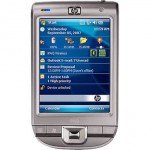
April 19, 2000: iPAQ, Cassiopeia, Jornada Released
Subscribe! Spotify | RSS | More 2000– Before smartphones, Personal Digital Assistants were the device to have. You could store contacts, write memos, set up, read and send email and even play a nice game of Solitaire, or the game where you eliminated color marbles. I – in my IT career – not only had a […]
April 18, 2006: HD DVD Format
Subscribe! Spotify | RSS | More 2006 – Toshiba launches the HD DVD format in the US. The first HD DVD players were the HD-A1 and HD-XA1. RCA would rebrand the A1 to the HDV-5000. The first HD DVD with TrueHD soundtrack was the Phantom of the Opera. Osborne Computer introduces the Osborne Executive and […]