Back the Day in Tech History show - $30 for one week or $100 for four weeks!
For 1 Week ($30):
for four weeks ($100):
Tagged with " Linux"

May 9: Linux Adopts Tux the Penguin

May 8, 2012 by     No Comments    Posted under: Day in Tech History, Linux
Tux the Penguin

Tux the Penguin

1996 - Linus Torvelds adopts Tux the Penguin as the official mascot of Linux. Tux was first suggested by Alan Cox, then officially created by Larry Ewing. After a little refinement, Tux came to represent not only Linux, but also Open Source. James Hughes named the penguin TUX – for Torveld’s UniX. The image of Tux was submitted in previous Linux Logo contests, but never won. They then adopted Tux as the mascot, where he is loved by all who live and work in this space.

Full Day in Tech History podcast show notes for May 9

Friends of Day in Tech History


Want to advertise on Day in Tech History? Its easier than you think! Contact me at geekazine@gmail.com for more info!

Please add to your favorite aggregator. RSS Feed – iTunes – Stitcher –TechPodcasts – Google+ - Twitter@dayintechhist

Subscribe to Day in Tech History Show Notes!

Play

April 15: 100 Years of Titanic, Damn Small Linux Released

Apr 14, 2012 by     No Comments    Posted under: Day in Tech History, Historical Date, Linux
damn small Linux

damn small Linux

1912 – The RMS Titanic strikes an iceberg at 11:40 pm (7:40 pm EST). Of course from that, over 1,500 lost their lives to the cold, dark water, when the ship took the immortal dive. The ship had a passenger manifest of 2,223. The wreck was finally discovered on September 1st, 1985.

2005 – It was the release of the Damn Small Linux program, a Linux distribution that was designed to take up as little drive space as possible. John Andrews – DSL‘s developer – Never allowed the ISO to go past 50 MB in size. You would be able to put DSL onto a CD or USB drive if needed. You can get the DSL ISO to install here

Full Day in Tech History podcast show notes for April 15

Friends of Day in Tech History


Meet anywhere with your iPad, GoToMeeting keeps you going – Get a 30 day free trial of GotoMeeting

Please add to your favorite aggregator. RSS Feed – iTunes – Stitcher –TechPodcasts – Google+ - Twitter@dayintechhist

Subscribe to Day in Tech History Show Notes!

  • Pentium II processors introduced
  • The paper disc format is announced
  • The first McDonalds Hamburger is sold
  • Search Engine “Cuil” launches in alpha.
Play

February 11: RAND Corporation Brings JOSS Out of Service

Feb 10, 2012 by     No Comments    Posted under: Day in Tech History, Geek
JOSS

JOSS

1966 – The Johnniac Open Shop System (JOSS) was taken down by the RAND Corporation. JOSS was set up to relive bottlenecks in programming batches, but more and newer work pretty much took the JOSS to the limit and ultimately became a bottleneck. Therefore, JOSS was taken offline indefinitely.

JOSS began operation in 1953.

Wikazine – Full show notes for February 11

Geek Smack Sponsor board!

Sponsor: Mozy for Business Call 877.669.9776 or MozyPro.com Code Podcast15 saves you 15%
Please add to your favorite aggregator. RSS Feed – iTunes – Stitcher –TechPodcasts – Google+ - Twitter@dayintechhist

Subscribe to Day in Tech History Show Notes!

  • Digital Computers discontinues the Rainbow
  • CRUX Linux 0.5.3 Released
  • Starbucks announces they will switch from T-Mobile to AT&T at their stores.
Play

February 10: “Linux is Obsolete” Thread Ends

Feb 9, 2012 by     No Comments    Posted under: Day in Tech History, Linux
Linux

Linux

1992 - Comp.os.minix was the location for famous thread “Linux is Dead”. 73 Posts went back and forthe before Bill Mitchell closes it.  Andy Tanenbaum (MINIX) started the thread and Linus Torvolds shot back. This is how the thread started out:

Wikazine – Full show notes for February 10

Geek Smack Sponsor board!

Sponsor: Mozy for Business Call 877.669.9776 or MozyPro.com Code Podcast15 saves you 15%
Please add to your favorite aggregator. RSS Feed – iTunes – Stitcher –TechPodcasts – Google+ - Twitter@dayintechhist

Subscribe to Day in Tech History Show Notes!

I was in the U.S. for a couple of weeks, so I haven’t commented much on LINUX (not that I would have said much had I been around), but for what it is worth, I have a couple of comments now.

As most of you know, for me MINIX is a hobby, something that I do in the evening when I get bored writing books and there are no major wars, revolutions, or senate hearings being televised live on CNN. My real job is a professor and researcher in the area of operating systems.

As a result of my occupation, I think I know a bit about where operating are going in the next decade or so. Two aspects stand out:

1. MICROKERNEL VS MONOLITHIC SYSTEM
Most older operating systems are monolithic, that is, the whole operating system is a single a.out file that runs in ‘kernel mode.’ This binary contains the process management, memory management, file system and the rest. Examples of such systems are UNIX, MS-DOS, VMS, MVS, OS/360, MULTICS, and many more.

The alternative is a microkernel-based system, in which most of the OS runs as separate processes, mostly outside the kernel. They communicate by message passing. The kernel’s job is to handle the message passing, interrupt handling, low-level process management, and possibly the I/O. Examples of this design are the RC4000, Amoeba, Chorus, Mach, and the not-yet-released Windows/NT.

While I could go into a long story here about the relative merits of the two designs, suffice it to say that among the people who actually design operating systems, the debate is essentially over. Microkernels have won. The only real argument for monolithic systems was performance, and there is now enough evidence showing that microkernel systems can be just as fast as monolithic systems (e.g., Rick Rashid has published papers comparing
Mach 3.0 to monolithic systems) that it is now all over but the shoutin`.

MINIX is a microkernel-based system. The file system and memory management are separate processes, running outside the kernel. The I/O drivers are also separate processes (in the kernel, but only because the brain-dead nature of the Intel CPUs makes that difficult to do otherwise). LINUX is a monolithic style system. This is a giant step back into the 1970s. That is like taking an existing, working C program and rewriting it in BASIC. To me, writing a monolithic system in 1991 is a truly poor idea.

2. PORTABILITY
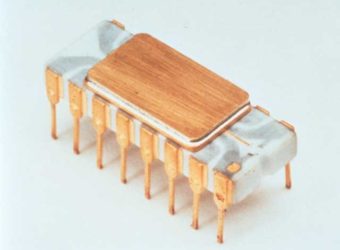
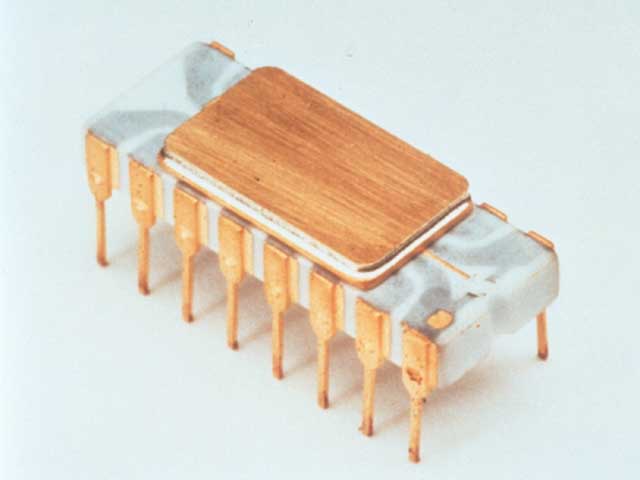
Once upon a time there was the 4004 CPU. When it grew up it became an 8008. Then it underwent plastic surgery and became the 8080. It begat the 8086, which begat the 8088, which begat the 80286, which begat the 80386, which begat the 80486, and so on unto the N-th generation. In the meantime, RISC chips happened, and some of them are running at over 100 MIPS. Speeds of 200 MIPS and more are likely in the coming years. These things are not going to suddenly vanish. What is going to happen is that they will gradually take over from the 80×86 line. They will run old MS-DOS programs by interpreting the 80386 in software. (I even
wrote my own IBM PC simulator in C, which you can get by FTP from ftp.cs.vu.nl = 192.31.231.42 in dir minix/simulator.) I think it is a gross error to design an OS for any specific architecture, since that is not going to be around all that long.

MINIX was designed to be reasonably portable, and has been ported from the Intel line to the 680×0 (Atari, Amiga, Macintosh), SPARC, and NS32016. LINUX is tied fairly closely to the 80×86. Not the way to go.

Don`t get me wrong, I am not unhappy with LINUX. It will get all the people who want to turn MINIX in BSD UNIX off my back. But in all honesty, I would suggest that people who want a **MODERN** “free” OS look around for a microkernel-based, portable OS, like maybe GNU or something like that.

Andy Tanenbaum (ast@cs.vu.nl)

P.S. Just as a random aside, Amoeba has a UNIX emulator (running in user space), but it is far from complete. If there are any people who would like to work on that, please let me know. To run Amoeba you need a few 386s, one of which needs 16M, and all of which need the WD Ethernet card.

Play

January 25: SQL Slammer Worm DDOS

Jan 24, 2012 by     No Comments    Posted under: Day in Tech History, Geek
virusscan

Virus Scan

2003 – 5:30 AM. SQL Slammer worm caused a DDOS, infecting 75,000 within ten minutes. Christopher J. Rouland, the CTO of ISS, named it Slammer. The worm exploited a buffer overflow bug in Microsoft‘s SQL Server and Desktop Engine database products.

Wikazine – Full show notes for January 25

Geek Smack Sponsor board!

Sponsor: Mozy for Business Call 877.669.9776 or MozyPro.com Code Podcast15 saves you 15%
Please add to your favorite aggregator. RSS Feed – iTunes – Stitcher –TechPodcasts – Google+ - Twitter@dayintechhist

Subscribe to Day in Tech History Show Notes!

  • Version 2.2 of Linux
  • Jini Network Architecture
  • Judge reinstates how Microsoft can incorporate Sun Java

Play

December 28: Compuserve Blocks 200 sites

Dec 27, 2011 by     No Comments    Posted under: Day in Tech History, Geek, Internet
Compuserve

Compuserve

1995 - Compuserve blocks access to over 200 sites that have explicit content. They do it to avoid issue with the German Government. The sites will be blocked until Feb 13, 1996 when all but 5 sites are restored.

Sponsor: Mozy for Business Call 877.669.9776 or MozyPro.com Code Podcast15 saves you 15%

Wikazine – Full show notes for December 28
Please add to your favorite aggregator. RSS Feed – iTunes – Stitcher –TechPodcasts – Google+ - Twitter@dayintechhist

Subscribe to Day in Tech History Show Notes!

Other Historical Events in Technology

  • IBM 1420 Bank Transit System is released
  • Windows 7 Beta 1
  • Nintendo Wii runs Linux
Play

December 24: Watch out for Werewolves

Dec 23, 2011 by     No Comments    Posted under: Day in Tech History, Geek
Werewolf

Werewolf

An interesting fact: Russian folklore believed that December 24th was the day people could be turned into Werewolves. Any child that is born on December 24th would be considered a werewolf. There are many ways to detect a werewolf – bristles under the tongue was one way to check.

Sponsor: Mozy for Business Call 877.669.9776 or MozyPro.com Code Podcast15 saves you 15%

Wikazine – Full show notes for December 24
Please add to your favorite aggregator. RSS Feed – iTunes – Stitcher –TechPodcasts – Google+ - Twitter@dayintechhist

Subscribe to Day in Tech History Show Notes!

Other Historical Events in Technology

  • Fox-Linux 1.0 Released
  • Verizon awarded $33 million against Cybersquatters
Play

December 22: the Euphonium

Dec 21, 2011 by     No Comments    Posted under: Day in Tech History, Music
euphonium

euphonium

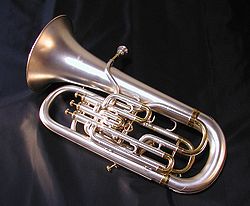
1845 – Today, we’re travelling to the Geek side of things. It’s not everyday that I get to talk about my other passion – Music. The Euphonium – often mistaken for a Tuba – was created. It was also coined in later years as “P.T. Barnums’ Euphonium. The word itself comes from the Greek word Euphonos – or Sweet voiced.

Sponsor: Mozy for Business Call 877.669.9776 or MozyPro.com Code Podcast15 saves you 15%

Wikazine – Full show notes for December 22
Please add to your favorite aggregator. RSS Feed – iTunes – Stitcher –TechPodcasts – Google+ - Twitter@dayintechhist

Subscribe to Day in Tech History Show Notes!

Other Historical Events in Technology


Play

November 30 – IBM 7090 Mainframe Cost $2.9 Million

Nov 29, 2011 by     No Comments    Posted under: Day in Tech History, IBM

IBM 7090

IBM 7090

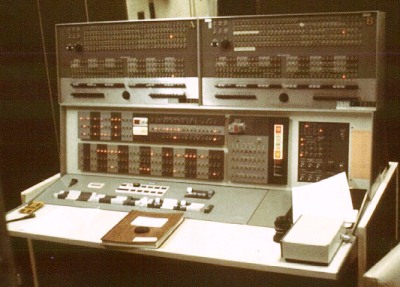
1959 - Want to see a 2.9 million dollar computer? That was the IBM 7090 – a transistorized mainframe computer that was designed for scientific research and tech applications. It replaced the 709 series, which used vacuum tubes. The first two were delivered – one of the 7090′s would be used for the Mercury and Gemini space missions. Check out more on the IBM 7090

Sponsor: GotoMeeting with HD Faces makes it easy to collaborate online anytime. TRY GOTOMEETING FREE! 

Wikazine – Full show notes for November 30
Please add to your favorite aggregator. RSS Feed – iTunes – Stitcher –TechPodcasts – Twitter@dayintechhist

Subscribe to Day in Tech History Show Notes!

Other Historical Events in Technology

Play

November 24: Novell Owns UNIX, UNIXWare Over SCO Group

Nov 23, 2011 by     No Comments    Posted under: Day in Tech History, Linux

Novell

Novell

2008 - After a long court battle with the Santa Cruz Operations (SCO) group, a judge rules that Novell is the owner of UNIX and UNIXWare copyrights. In 2003 – just after SCO changed their name from Caldera - had made a claim that the SCO IP was incorporated into Linux and that they should get a cut from each copy sold. Novell states that they own the code to UNIX and therefore this claim was not valid. Battles still goon to this day, with SCO group dwindled down to a shell (no pun intended). Part of the rulings on this case have been reversed since. Currently, SCO has lawsuits with IBM and Linux.

This episode is ad free thanks to donations by Susabelle Kellmer and Gideon Marken

Wikazine – Full show notes for November 24

Please add to your favorite aggregator. RSS Feed – iTunes – Stitcher –TechPodcasts – Twitter@dayintechhist

Other Historical Events in Technology

Play

Want to Talk Tech History?

Jeffrey Powers would love to come on your show and discuss the events of technology history. Feel free to call him @ 608-205-4378. You can also set up a meeting below:


Subscribe to Day in Tech History

QR Code

QR Codeqr code

Select a date on the calendar

May 2012
M T W T F S S
« Apr    
 123456
78910111213
14151617181920
21222324252627
28293031  

Recent Comments

    UA-15892313